
How To Start Cold Storage Business In Dubai, UAE: A Step By Step Guide
Dubai's strategic location and flourishing economy have attracted a diverse range of entrepreneurs seeking to capitalize on its lucrative markets. The warehousing sector, particularly cold storage facilities, presents significant growth potential for Entrepreneurs. Smart Zones® UAE's experienced business setup consultants can guide you through the process of launching your cold storage business in Dubai.
- 100% Foreign Ownership
- Easy Business Setup
- World-Class Infrastructure
- Profit and Capital Repatriation
Reviewed by Shobhna Thapa, Legal Advisor · Updated Sept 2026
Quick Answer
To start a cold storage business in Dubai, choose between a mainland or free zone warehouse licence, secure a facility that meets Dubai Municipality food-safety and civil defense requirements, submit your documents (including a mandatory cash deposit or bank guarantee), and apply for your visas. Setup involves a warehouse trade license plus facility-specific approvals, with licensing costs typically starting from around AED 12,500–16,561 and rising based on warehouse size, location, and cold-storage customization.
- Where: Dubai mainland (DED) or a free zone (e.g. Hamriyah, Sharjah Free Zone)
- Key requirement or license type: Warehouse/storage trade license with cold storage activity code, plus Dubai Municipality food-safety approval for food-grade storage
- Regulator or licensing body: Department of Economic Development (mainland) or the relevant free zone authority, with Dubai Municipality overseeing food-safety and civil defense compliance
- Typical setup cost: From around AED 12,500–16,561 for licensing alone, plus a cash deposit/bank guarantee (AED 50,000 for private warehouses, AED 1,500,000 for public warehouses) and facility costs
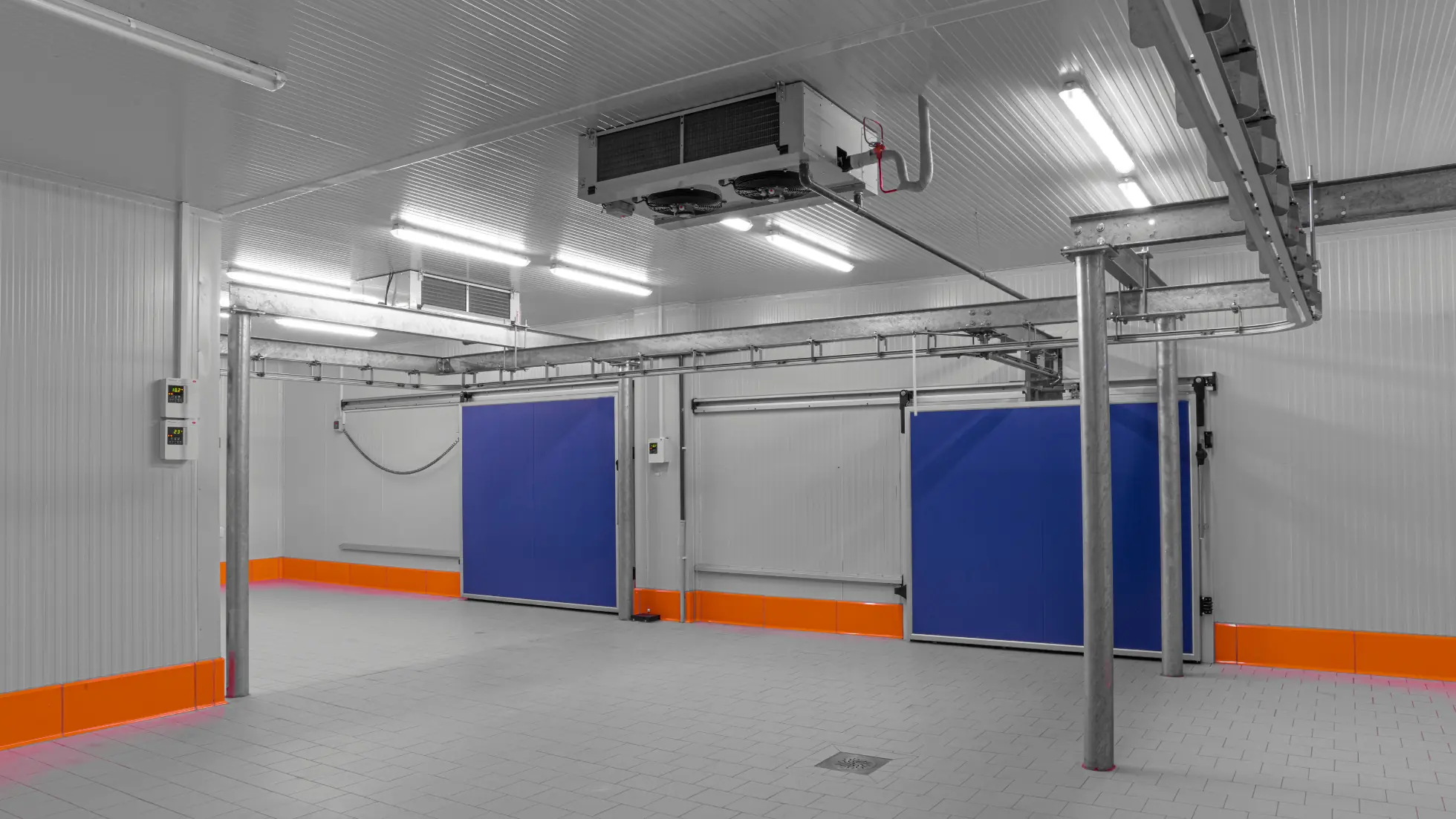
The UAE's arid climate, characterized by high temperatures, necessitates stringent temperature control measures for food and beverage companies. To maintain optimal freshness, quality, and ultimately, consumer health, storage temperatures must not exceed +25°C. The evolution of consumer preferences and advancements in refrigeration technology have significantly impacted food consumption patterns. Today, consumers expect a wider variety of fresh, high-quality food products year-round. Industrial cold storage solutions play a critical role in enabling food and beverage companies to meet these demands by preserving product integrity and extending shelf life.
Why You Should Start Your Cold Storage Company in Dubai, UAE ?
The United Arab Emirates' arid climate, characterized by high temperatures and low humidity, necessitates the use of cold storage facilities. This infrastructure is crucial for preserving perishable goods and preventing spoilage. Without proper temperature control, essential food and commodities would deteriorate rapidly.
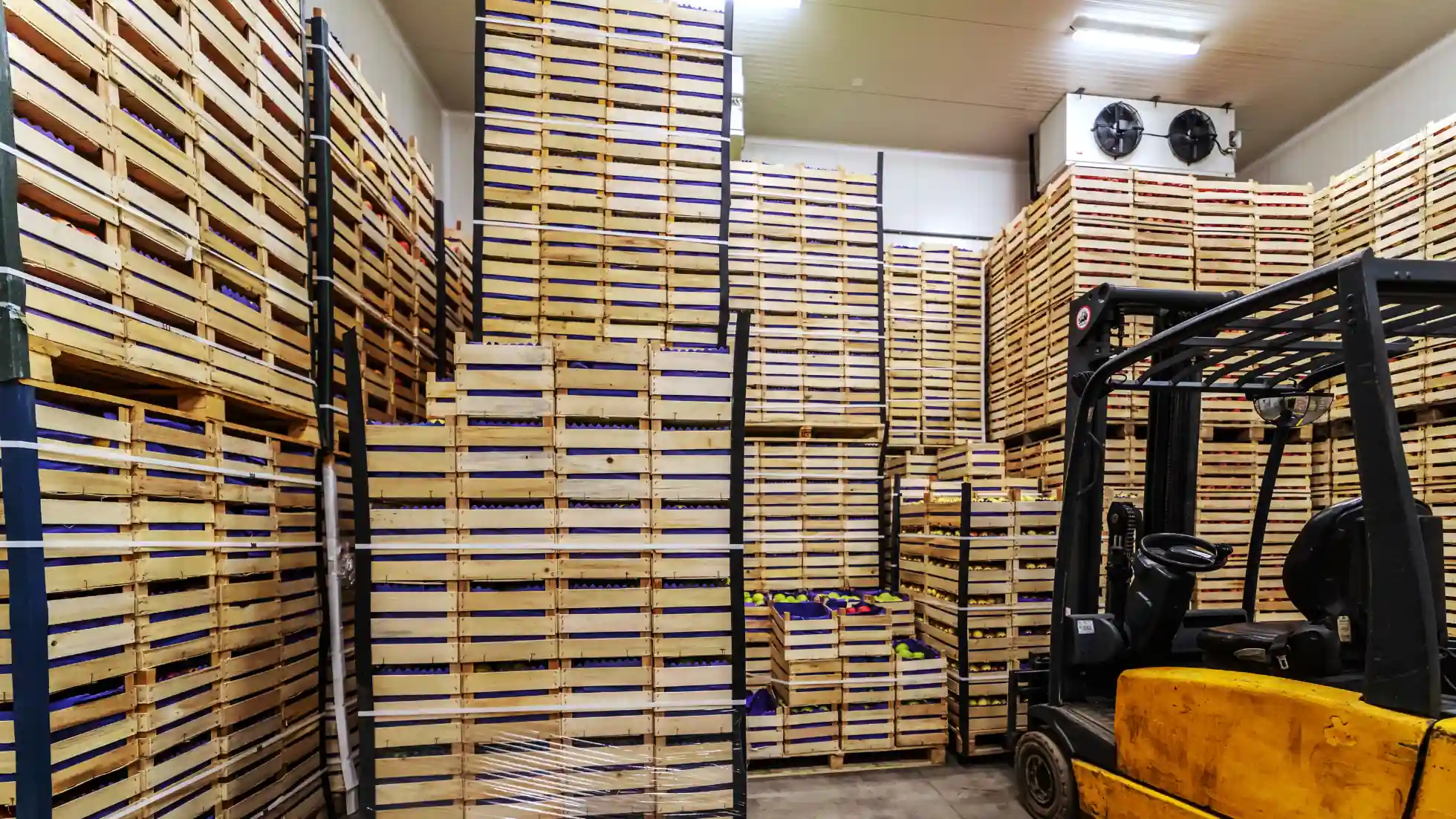
Consequently, the demand for cold storage services in the UAE remains high. This demand translates into a potentially lucrative market for businesses venturing into the cold storage sector. While the initial investment can be significant, the long-term returns are also substantial, particularly considering the growing demand for perishable food products like fruits, meat, and eggs.
Benefits of Establishing a Cold Storage Business in Dubai, UAE
Dubai presents a compelling location for establishing a cold storage business. Beyond the general benefits of operating in the UAE, the Emirate offers specific advantages tailored to the cold storage sector.
- Unrestricted Foreign Ownership: Unlike some sectors in the UAE, foreign investors can retain 100% ownership of their cold storage businesses in Dubai.
- Profit and Capital Repatriation: Businesses have the freedom to repatriate 100% of their earned profits and invested capital back to their home countries, ensuring financial flexibility.
- Access to a Global Talent Pool: Dubai attracts skilled workers from around the world. Companies can sponsor foreign worker visas, facilitating the recruitment of a diverse and qualified workforce.
- World-Class Infrastructure: Dubai boasts state-of-the-art infrastructure, allowing cold storage businesses to leverage the latest technologies and maintain a competitive edge.
Types of Cold Storage Facilities for Food Products in UAE
The UAE's arid climate necessitates cold storage facilities for food companies to maintain product freshness and safety. Fortunately, a variety of pre-configured and customizable low-temperature warehouses are available throughout the country. These facilities can be tailored to accommodate a single product type or multiple products based on a client's specific needs and financial resources. Here's a breakdown of commonly utilized cold storage solutions for food items in the UAE:
Onion & Potato Storage
Dedicated facilities maintain optimal temperature and humidity levels for extended storage of root vegetables.
Red Meat Storage
Specialized cold storage ensures proper temperature control for red meat products.
Fish & Seafood Storage
Rigorously controlled temperatures and potentially high-humidity environments safeguard the quality of fish and seafood.
Poultry Storage
Dedicated facilities maintain ideal temperatures for safe and extended storage of poultry products.
Bakery Products Storage
Controlled temperature and humidity environments preserve the freshness and quality of bakery goods.
Fruit Storage
Specialized storage incorporates temperature and potentially humidity control to maintain optimal conditions for various fruits.
Citrus Storage
Dedicated facilities cater to the specific temperature and humidity requirements of citrus fruits.
Milk & Milk Products Storage
Stringent temperature control safeguards the quality and safety of milk and milk-based products.
Business Structure and Planning in Dubai, UAE
Choosing the right business structure is vital when launching a firm in Dubai. Options include:
- 1. Free Zone Company: A free zone company provides foreign ownership, and simplified registration processes, ideal for global operations.
- 2. Mainland Company: Mainland companies adhere to UAE laws and regulations and are suitable for businesses targeting the domestic market.
Consider factors like your business services, target market, and long-term goals when selecting a structure, and consult legal and business experts for guidance.
Mainland vs Free Zone: Warehouse Licensing for Cold Storage
| Factor | Mainland | Free Zone |
|---|---|---|
| Licensing authority | Department of Economic Development (DED), plus Dubai Municipality approvals | Relevant free zone authority (e.g. Hamriyah, Sharjah Free Zone), plus applicable municipality/food-safety approvals |
| Market access | Can store and distribute goods directly across the UAE domestic market without a local distributor | Typically oriented toward import/re-export and international trade; mainland distribution may need a local distributor or additional approval |
| Ownership | 100% foreign ownership permitted | 100% foreign ownership permitted |
| Typical cost driver | Warehouse rent/purchase plus DED license and municipality inspection fees | Bundled warehouse + license packages (e.g. from ~AED 48,000/year for smaller units), often simpler to budget for |
| Best for | Businesses distributing cold-stored goods directly to UAE mainland retailers, restaurants, or distributors | Businesses focused on import/export, regional re-distribution, or a free zone ecosystem of logistics partners |
Whichever route you choose, your facility still needs to meet Dubai Municipality's food-safety and civil defense requirements if you intend to store food products. Smart Zones® UAE can help you confirm which route fits your target market.
Steps to Launch a Cold Storage Business in Dubai, UAE
Establishing a Cold Storage Business in Dubai involves several steps:
Embark on the journey of opening a business in Dubai by partnering with Smart Zones® UAE. Our adept company formation specialists will guide you through the business license application and setup process, liaising with relevant government and municipal authorities on your behalf.
Dubai offers two primary locations for cold storage businesses: the mainland and various free zones. Each provides distinct advantages. Conducting thorough research is crucial to identify the zone best suited to your specific needs.
Selecting the appropriate legal structure for your business is essential. Common options in Dubai include sole proprietorship, general partnership, public shareholding company, and limited liability company. Each structure has unique regulations and legal implications, so careful consideration is necessary.
Assigning a distinctive trading name is vital. Trademarking your chosen name, subject to UAE availability, protects your brand identity. Utilize online resources to confirm name availability.
Once the initial steps are complete, apply for a trade license from the Department of Economic Development (DED). This license authorizes the operation of your cold storage business within Dubai.
Following DED approval, secure the necessary land for your cold storage unit. Options include purchasing or leasing land. A tenancy contract and EJARI certificate are required by the DED to finalize the trade license.
Depending on your intended business activities, additional approvals from external entities may be necessary. For example, space approval from the Dubai Municipality's Planning Section might be required.
After obtaining all requisite external approvals, submit the necessary documents to the DED. They will provide a payment voucher for processing fees. Upon successful completion, the trade license will be issued within a few days.
A trade license allows you to apply for visas for yourself, your immediate family, a domestic worker, and potentially, a limited number of employees, based on the size of your acquired or leased space.
Complete the process by opening your corporate bank account for your Dubai Business with Smart Zones® UAE. This final step paves the way for the successful opening of your Business.
Remember that the process may vary depending on your chosen jurisdiction and business activities. Consulting legal and business experts familiar with Dubai's business setup landscape is highly recommended.
Looking for a seamless business setup experience? Trust Smart Zones® Dubai to pave the way.
Documents Required to Start a Cold Storage Business in Dubai, UAE
The application for a warehouse license typically requires the following documentation:
- A cash deposit or bank guarantee is mandatory. The amount varies depending on the warehouse type: AED 50,000 for private warehouses and AED 1,500,000 for public warehouses.
- A copy of the valid trade license is essential.
- A copy of the applicant's Emirates ID.
- A copy of the civil defense certificate demonstrating adherence to safety regulations.
- (if applicable) A copy of the applicant's residency visa.
- A certified copy of either the lease agreement or ownership documents for the warehouse premises.
- A copy of the warehouse plan depicting the layout and functionalities.
- A list of the types of commodities intended for storage within the warehouse.
Submitting incorrect documents can lead to immediate rejection. Our consultants at Smart Zones® UAE ensure you have the right documents, avoiding any complications in the process.
Dubai Municipality Food-Safety Approval
If your cold storage facility will hold food products, it must also pass Dubai Municipality's food-safety approval process (in addition to the civil defense certificate and cash deposit/bank guarantee above). This generally involves:
- Facility design review: submitting your warehouse layout and cold-room specifications for review against Dubai Municipality's food storage and hygiene standards before fit-out.
- Pre-operational inspection: an on-site inspection to confirm temperature control, pest control, segregation of product types, and staff hygiene facilities meet requirements.
- Food safety permit issuance: once compliant, Dubai Municipality issues the food-safety approval/permit needed alongside your trade license to legally store food products.
- Ongoing compliance: periodic re-inspection and permit renewal are required to keep the facility approved for food storage.
Cost of Establishing a Cold Storage Business in Dubai, UAE
The cost of acquiring a warehouse license in the UAE is influenced by several variables, including the warehouse's size, location, type, specific features, cold storage customizations (if applicable), power consumption requirements, and potential assembly needs. Licensing alone typically starts from around AED 12,500–16,561, with facility and compliance costs layered on top:
- Trade license and registration: from approximately AED 12,500–16,561 for the warehouse/storage license itself, depending on jurisdiction and activity codes.
- Cash deposit or bank guarantee: AED 50,000 for private warehouses, or AED 1,500,000 for public warehouses, held as a compliance deposit.
- Warehouse rent or purchase: indicative free zone packages start around AED 48,000 per year for a smaller unit (e.g. ~125 sqm in Sharjah Free Zone) up to AED 85,000 per year or more for a larger unit (e.g. ~307 sqm in Hamriyah Free Zone).
- Food-safety and civil defense approvals: inspection and permit fees from Dubai Municipality and civil defense, plus any facility upgrades needed to pass inspection.
- Cold storage fit-out: refrigeration units, insulation, and temperature-monitoring systems, which vary significantly based on capacity and product type.
- Ongoing costs: annual license and food-safety permit renewal, staff visas, and power consumption for refrigeration.
For a precise quotation, reach out to Smart Zones® UAE to obtain an updated estimate tailored to your specific requirements. This ensures that you are securing the most competitive rate for the services essential to your business.
Starting a cold storage business in Dubai involves several steps. First, partner with Smart Zones® UAE to guide you through the business setup process. Then, select the economic zone that best suits your needs, determine your company structure, register your trading name, acquire a business trade license, secure a facility, obtain necessary external approvals, submit required documents and fees, apply for visas, and finally, open your corporate bank account with Smart Zones® UAE.
Dubai's arid climate necessitates cold storage facilities for preserving perishable goods, creating high demand in the market. With unrestricted foreign ownership, profit and capital repatriation, access to a global talent pool, and world-class infrastructure, Dubai offers a lucrative environment for cold storage businesses to thrive in.
Establishing a cold storage business in Dubai offers various benefits. These include unrestricted foreign ownership, profit and capital repatriation, access to a global talent pool, and world-class infrastructure. Additionally, Dubai's strategic location and high demand for cold storage services enhance the potential for long-term profitability.
The UAE offers various cold storage solutions tailored to different food products, including onion & potato storage, red meat storage, fish & seafood storage, poultry storage, bakery products storage, fruit storage, citrus storage, and milk & milk products storage. These facilities maintain optimal temperature and humidity levels to ensure product freshness and safety.
To start a cold storage business in Dubai, you'll need essential documents such as a valid trade license, Emirates ID, civil defense certificate (if applicable), residency visa (if applicable), lease agreement or ownership documents for the warehouse premises, warehouse plan depicting layout and functionalities, and a list of intended commodities for storage.
The cost of establishing a cold storage business in Dubai varies based on factors such as warehouse size, location, type, features, customizations, power consumption, and assembly needs. Indicative minimum costs for obtaining a warehouse license in free zones range from approximately AED 48,000 to AED 85,000 per year. For precise quotations, consulting Smart Zones® UAE is recommended.
Cold storage and warehousing businesses in the UAE are subject to standard 5% VAT on taxable supplies once registration thresholds are met, and to UAE corporate tax (0% up to the small business threshold, 9% above it on mainland profits) unless a qualifying free zone entity meets the conditions for the 0% qualifying income rate. Warehousing and logistics services generally do not carry special VAT exemptions, so budget for both VAT registration and corporate tax compliance alongside your trade license. Confirm your specific obligations with a tax advisor or Smart Zones® UAE.
If your facility stores food products, Dubai Municipality requires a design review of your warehouse layout and cold-room specifications, a pre-operational inspection covering temperature control, pest control, and hygiene facilities, and issuance of a food-safety permit before you can legally store food. This approval sits alongside your civil defense certificate and cash deposit/bank guarantee, and is subject to periodic re-inspection and renewal.
Mainland (DED) licensing suits businesses that need to distribute cold-stored goods directly to UAE mainland retailers, restaurants, or distributors without a local intermediary. Free zones (such as Hamriyah or Sharjah Free Zone) often bundle warehouse space with the license and suit import/export and re-distribution-focused operations. Both permit 100% foreign ownership, so the decision usually comes down to your target market and distribution model.
Want to know more, talk to Smart Zones® Dubai advisory team they will be happy to help. Ready to invest in your future?